

Ruth Underwood
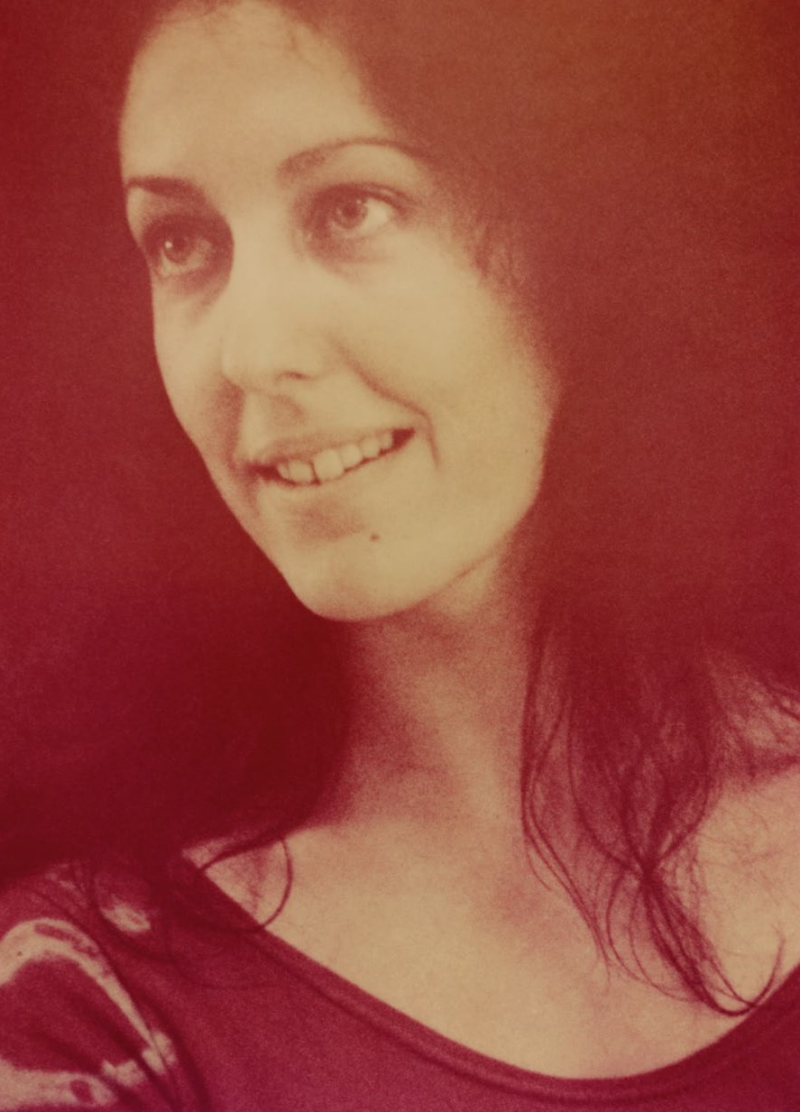
Ruth Komanoff Underwood played percussion and keyboards for Zappa between 1968 and 1977, appearing first on the album Uncle Meat (1969).
She can be seen in the movie 200 Motels (1971) – as well as A Token Of His Extreme (1976) and Roxy—The Movie (2015) – and heard on numerous albums, including Over-Nite Sensation (1973), Apostrophe (’) (1974), Roxy & Elsewhere (1974), One Size Fits All (1975), Zoot Allures (1976), Zappa In New York (1978), Studio Tan (1978), Sleep Dirt (1979), The Dub Room Special! (2007), Wazoo (2007), Road Tapes, Venue #2 (2013), The Roxy Performances (2018), Halloween 73 (2019) and all but the fifth volume of Zappa’s You Can’t Do That On Stage Anymore series of live recordings.
She married Ian Underwood, the straight member of the Mothers, in 1969; they divorced in 1986.
Underwood was the drummer with the rock group the Hamilton Face Band during 1969. Throughout the 70s, she collaborated in recording sessions for a small number of performers other than Zappa – most notably the band Ambrosia, composer Jasun Martz, keyboardist George Duke, and drummer Billy Cobham.
In 2008, Underwood commissioned Gordon Stout, the head of percussion at Ithaca College in New York, to write something for the Toronto-based percussion ensemble Nexus. She requested a short piece that could be programmed as a concert opener or encore, and would appeal tonally and melodically to audiences.
Stout composed Prelude: A Winter Song for percussion quintet (three marimbas and two vibraphones/percussion). Nexus premiered the piece at the Orangeville Concert Association in Ontario on 3 April 2009.
Here’s the audio of a performance of the work by the Lawrence University Percussion Ensemble from 28 May 2017. And here’s video of it played by the Central Michigan University Percussion Ensemble on 26 October 2023.
Over the last 30-plus years, I have interviewed over 50 people who knew or worked with FZ. In 2017 a compendium of many of these was published as Frank Talk: The Inside Stories of Zappa’s Other People. A number of people have asked me when I am going to interview Ruth.
She retired from playing music after her time with FZ in the 70s and rarely talks about that period. But I have been trying and, in 2022, it almost happened; through Art Tripp, I sent her a list of questions to ponder. A few months later, Art told me that Ruth had mostly finished answering my questions, but had then decided not to submit her commentary to me; instead, she decided to add her answers to a memoir she’s been compiling over the years. She did though tell Art that if she ever changes her plan, she would send her answers to me then.
Oh well – I tried. And fingers crossed, it still might happen. But in the meanwhile, I have concocted the following by proxy (& elsewhere) interview with her, based on actual quotations from Ruth across the years. My questions are all real!
You were one of the lucky ones who saw The Mothers at the Garrick Theater in 1967.
Yes, his ‘Absolutely Freeeee’ show there changed my life. I no longer wanted to be a timpanist at the New York Philharmonic, or a virtuoso marimba soloist. All I ever wanted from that point on was to play Frank’s music.
One never knew what to expect from the shows. I remember Stravinsky being played. I remember droning music going on for ages and then in the middle of all of that, the song that became Oh No sort of breaking through the clouds, and it just shocked me – how such beautiful music could come out of such bizarre looking people.
I remember being very upset when they finally finished their stint at the Garrick Theater and went back to LA. I felt as if the real heart had gone out of New York City, and I had to get back on with my conservatory music training life, which seemed very dull after this.
Tell me about your first encounter with Frank.
One night my brother Charlie and I went to the Village Gate to hear Miles Davis. We were standing around waiting for show time and Zappo – I thought his name was Frank Zappo – was just walking down Bleecker Street. This was before bodyguards; he was just a guy on his way to work. My brother accosted him and said, “You should hear my sister play! She’s a great marimbist! She can play anything!” I was totally embarrassed. Frank turned to me and said, “Fine. Bring your marimba backstage tomorrow and we’ll check ya out.”
I was living in Manhattan, my marimba was on Long Island, and I didn’t drive a car...what the hell am I gonna do? I didn’t show up.
What is a mystery to me is how he got my telephone number, because a few months later he called me. He said, “The Mothers Of Invention will be doing two nights at Town Hall and he would like me to be a part of that.” He asked if I was familiar with the Freak Out! album. I said, “Oh yeah.” Huge understatement: I knew every note and every word on that record. So he said he’d like me to come and play through that album on the marimba. I asked him if I could bring some of my friends – fellow musicians. He said, “Absolutely, just do whatever you want to that music.” So I thought okay, we’re gonna go cocktail music!
We showed up and there are my heroes. By now, I know all their names. And I remembered thinking, what if I screw this up? What if my brother makes a mistake? I only came to realise later that that would have been okay, because the more bizarre, the more adventurous and, I hate to say, the more humiliating it might have been for us, Frank would have milked that. He loved to watch people make complete fools of themselves.
But we didn’t: we were fucking great! When we left, Frank gave me a hug in a very tense sort of way. I remember thinking, I’m never gonna hear from him again.
But a few months later, he called and said, “We’re making an album, and we’d like you to be a part of it.” The next thing I knew I was recording Uncle Meat at Apostolic Studios on East 10th Street – summoned by a telephone call at my Greenwich Village apartment at midnight in 1968 after our initial introduction and hearing me play once.
I was still in school, and I had homework, so at first I turned him down. But Frank wore me down, so I went to the studio and recorded. I knew it was the shot of a lifetime, but I was conscious of school and had a life.
And next he had you perform on a standard drum kit for 200 Motels?
Ian Underwood and Herb Cohen saw me with the Hamilton Face Band and told Frank that I could really play the drums. All he wanted to know was whether I had Swiss cowbells, which of course I claimed I did – then immediately went to a professional drum shop and bought some.
Anyway, 200 Motels proved to be not entirely classically orchestrated on my part or fully rock and roll on my part. I was trying to make the decision then, for the rest of my life, which side I would be devoted to, even though I had hated Juilliard – abandoned that track – and moved to LA with Ian.
Would I rather be in another rock band? That only marginally appealed to me. And that’s when Frank concocted this drum part especially for me – no improvisation whatsoever, which was a mantra of mine – and gave me the answer.
What else do you recall about the filming of 200 Motels?
I didn’t hang out a lot, not a party type to go out and get sick, and I was really working to nail my parts, so I wasn’t running around on set.
I do remember the thrill of seeing Ringo Starr play my humble Ludwig Black Oyster Pearl drums that I’d bought because he had famously played ones exactly like them.
Frank had actually wanted me to do some acting in the film, though I never did see a script. He wanted me to be on-screen during Jimmy Carl Black’s song. I was supposed to be the ‘hot little bitch waitress,’ Opal. I got into costume and make-up – long denim skirt, boots, and a low-cut western-style shirt – but I never spoke any lines. Then MGM pulled the plug on time and money, and a lot of material never got played or filmed.
Fast forward two years, and you are part of the 20 piece Grand Wazoo for the short seven date tour. Frank always gave the players introductions with funny names – like Kenny ‘liquid delight’ Shroyer.
[laughs]
Well, FZ changed band instrumentation and personnel on a regular basis, so audiences were likely to be unfamiliar with some of the musicians on stage. Hearing a brief sample of each player’s setup during the introductions served a dual purpose too: it gave the technical crew and sound mixer a chance to make last-minute adjustments, and it gave the audience an opportunity to meet the musicians at each particular event with a tantalizing glimmer of what was to come.
At that time the band wasn’t grungy anymore. It was actually pretty refined and respectable. That incarnation consisted almost totally of college grads – so we’re not talking about bizarre-looking animals.
How did you then prepare for the grungy world of rock ‘n’ roll touring?
I was able to get tremendous satisfaction from doing some recording with him, but the idea of travelling as a member of the band was something that seemed completely out of reach: my Brentwood marimba was not meant to be folded or put into a typical standard touring instrument case. It was meant to be played with the resonators in them.
Then one day, he said to me, “You know, you could make your marimba electric.” He described to me about Barcus-Berry and transducers, and I thought ‘Well, this sounds just wonderful,’ and then he said, “What they do is, they drill into each bar.” As soon as he said ‘drill,’ you’d be drilling into my body because I owned at that time one marimba – the one that I’d had since I was 16 years old.
And to drill into that – that was just not going to happen! But Frank was so clever. He said, “I’ll get my vibraphone done if you get your marimba done.” And I thought, ‘If he’s going to take a chance with his vibraphone,’ and I knew he’d had that for a long time, ‘I’ll do it.’ And so we were able to travel with those instruments. It was extraordinary! I’ll never forget the day that we plugged it in for the first time. Frank handed me a mallet and said, “Okay...” It was deafeningly loud! He looked positively gleeful, almost maniacal, like, ‘Now I can rule the world! I’ve got all the percussion at my disposal!’ It was an extraordinary thing, he was almost like Dr. Frankenstein – you know: “It’s alive, it’s alive!”
The 1973 bands were incredibly percussion heavy – with you and Ralph Humphrey, and then the addition of Chester Thompson. Frank himself even joined in, because that’s how he started out – as a drummer.
Oh, I loved watching him play the drums because he had a very unorthodox way of holding the sticks, sitting, flailing away – somehow everything came out great but he looked ridiculous.
What was it like being the only female in the Roxy-era band?
It was something I very rarely noticed because I didn’t feel particularly womanly: I just felt like one of the guys – a musician.
So you left the band at the end of 1974, and then two years later Frank asked you to join him in New York.
Yes. When he invited me, I didn’t hesitate. I had witnessed FZ’s wildly interactive New York performances previously, so I had a sense that anything could happen. I had no idea, however, that this time I’d be confronted with two singular forces of nature: Terry Bozzio and The Black Page.
At the first rehearsal, I heard Terry’s solo-drum rendition, and was awed by how gracefully he navigated such complicated music! My mallet part at the time was a mere lead-sheet with only the melody indicated.
I found it hard to let go of Frank and The Black Page when I returned to LA. I played The Black Page #1 over and over again until a simple piano arrangement emerged. A few weeks later, Frank called me to do massive solo-percussion and keyboard overdubs for the Zappa In New York album. One night, during some downtime, I played my piano version. When Frank heard it, he wanted to record it, and we did.
When did you last speak with Frank?
When I heard he was ill, I called him up. For 14 years we had had no contact at all. He invited me to the house and we enjoyed some really nice visits with each other.
I started going over to bring him food. Not health food, which he would have immediately rejected, but meals from Casa Vega in the San Fernando Valley on Ventura Boulevard. While we ate, he’d play music and saw how receptive I was. Then he phoned to ask me to sample my marimbas. Even though sampling was against my religion, I would have done anything for him.
I was shocked because I hadn’t touched a pair of mallets since March 77. I ended up practicing for 14 hours, which was all the time I could get together in the context of my life then. I spent four days at Frank’s house sampling. This really was a miracle for me – that I could be reunited with him and still have something to offer.
And how did he seem?
He was dying. It was obvious. Yet, though he was exhausted, though his breathing wasn’t so good, though he couldn’t leap from one place to another the way he used to, he was still compelling and intimidating and sharp and exacting and wonderful – maybe even more than ever.
But I heard a tone in his voice. Not the same tone from the past where he wanted everything that he wanted immediately and in full, all the time. But rather an urgency. So there was no time to waste. And once we started, he was as descriptive as always, asking for things like quiet drum rolls that sounded like two gnats saying hello to each other on the drum head to build a crescendo.
What are your final thoughts on him?
He was the first person to create a place for rock ‘n’ roll marimba as a viable solo and ensemble instrument. Frank really lived in a world of percussion. That made the parts he wrote for me so satisfying to play. Frank composed music for my hands. He composed music for my temperament, my neuroses, my humour – Frank custom-tailored those parts for me. I’m not a composer but I felt like one when I played Frank’s music. It was an experience unlike any other.
After he died, I could never even imagine playing with anyone else – what would be the point?
The full faux interview can be found in my book Frank Zappa FUQ Vol. 2, exclusively available from my online store.
Create Your Own Website With Webador