

Ian Underwood
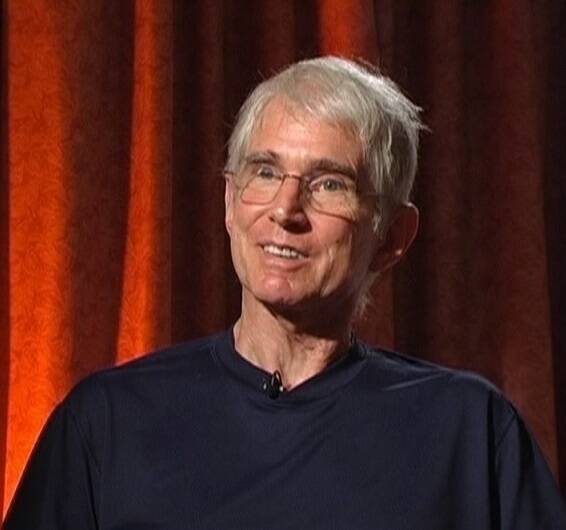
Ian Robertson Underwood played keyboards and woodwinds (and occasional rhythm guitar and accordion) for Zappa between 1967and 1975, appearing first on the album We’re Only In It For The Money (1968).
He can be seen in the movies 200 Motels (1971) and Uncle Meat (1987), and heard on numerous albums – including Cruising With Ruben & The Jets (1968), Uncle Meat (1969), Hot Rats (1969), Burnt Weeny Sandwich (1970), Chunga’s Revenge (1970), Fillmore East—June 1971 (1971), Over-Nite Sensation (1973), Ahead Of Their Time (1993) and all but the second volume of Zappa’s You Can’t Do That On Stage Anymore series of live recordings.
Although he briefly returned to play as part of the Abnuceals Emuukha Electric Symphony Orchestra for the Orchestral Favorites concerts in 1975, his tenure with Frank effectively ended in 1973. In a 1974 interview, Frank said, “I fired him for two reasons. The first reason was that he didn’t want to play the blues. Secondly, his wife was messing around with our sound engineer [Brian Krokus]. The vibe was getting too sensitive, so he had to go.”
Underwood had married Zappa’s marimbist Ruth Komanoff in 1969; they divorced in 1986.
Underwood subsequently worked with Alphonso Johnson, The Brothers Johnson, Ambrosia, Dave Grusin, Lee Ritenour, Quincy Jones, Barbra Streisand, Chicago, The Carpenters and Janet Jackson before concentrating on music and effects for TV and film – most notably, working alongside Academy Award winning composer James Horner.
Ian was scheduled to appear at London’s Roundhouse in 2010 for Zappa’s 70th birthday celebrations, but had to cancel due to ill health. He subsequently played at the Zappa Trust-approved 200 Motels: The Suites concert at the Walt Disney Concert Hall in 2013, and the ‘Orchestra En Regalia’ show at the Prague Proms in 2016. He also made some special guest appearances with The Zappa Band at the Baked Potato Jazz Club in LA.
Over the last 30-plus years, I have interviewed over 50 people who knew or worked with FZ. In 2017 a compendium of many of these was published as Frank Talk: The Inside Stories of Zappa’s Other People. A number of people have asked me when I am going to interview Ian.
Well, believe me: I have tried! And maybe one day it still might happen. But in the meanwhile, I have concocted the following bogus interview with him, based on actual quotations from the man across the years. My questions are real too!
When did you first hear The Mothers?
It was August of 1967. I was staying at my sister’s apartment in Manhattan. She was going to the Garrick Theater in the Village to hear them. I never listen to the radio, nor was I up on any pop or rock groups at all. I didn’t know anything about Zappa or the Mothers, or what they did. All I wanted to do was hear some interesting music. I went there completely randomly prepared to hear anything. I was with one of my sisters. We sat down in the 105° heat with about five other people in the audience. The stage was filled with all the paraphernalia, but nobody was on it. Then Motorhead came out. He was wearing a cowboy hat and this dress and he walked up to the mike and started talking about his car and Van Nuys Boulevard and random stuff.
Then one by one the band came out and everybody’s just playing noises. And it’s great. I’m loving everything that I’m seeing so far. Finally Frank comes out and he tunes his guitar. Then he turns around to the band and he jumps up and when his feet hit the floor, this organized piece of music comes out. This tapestry: Frank’s music, Stravinsky and Varese quotes, My Boyfriend’s Back, all these kinds of things that were unknown to me. I absolutely loved it.
After the show, I went up to the stage and said to Frank, “I just loved this concert. I’d love to play with you.” I told him I had graduated from Yale in 1961 with a B.A. in Composition; that I had just graduated from the University of California, Berkeley, with a Masters in Composition; and that I played piano and organ and all of the saxophones, flute, alto flute and clarinet. He said, “Okay, well, why don’t you come up to the recording studio tomorrow at Mayfair, on the upper West Side?”
That whole experience was growing up for me. The first record was We’re Only In It For The Money, then all the others. I especially liked Burnt Weeny Sandwich, Uncle Meat and 200 Motels. Hot Rats is one of my favourites, which was essentially just Frank and me.
Hot Rats is my favourite of all of Frank’s albums – has been since I first heard it at the age of 12! What did you think when he decided to break up the Mothers and make that album?
I think he was looking for new avenues and new directions. I don’t think he lost interest in the original Mothers, but that band wasn’t able to do what he wanted to do now. He was writing more challenging pieces, longer music that really had to be played by somebody who could look at it and play it really soon. Like then! And that wasn’t a feature of the first Mothers band.
As you say, you worked very closely with Frank on Hot Rats; can you talk a little about that?
Sure. Peaches En Regalia has the most overdubs – I recorded ten separate tracks. He was into the new 16-track studios and was obsessive about overdubbing. I think he even went back and replaced a lot of my organ parts!
Son Of Mr. Green Genes was something we’d been playing in some form or another for a while, so I knew the piece really well. It was one of the pieces that was a little more scored out, and a little bit more complicated. That’s what makes the album. Frank takes a long guitar solo, so that piece is a little bit more like what we might play onstage. There’s a kind of a back and forth and playing against each other.
In the liner notes, Frank describes the album as a movie for your ears. That is a good description of the way I hear it.
The Gumbo Variations is all improvised. This is sort of basic blues rock music. Frank said Archie Shepp’s Fire Music was one of the best albums he’d heard, and he wanted me to get that on tape. We did my solo in one take, and then overdubbed it. There may have been some editing, but I think my performance was just one take. Don Harris’ violin solo I think was on the original track, with me on keyboards. The harmonies were a little bit more extended than regular harmonies. So if it’s a C chord, you could have normal triads – C, E, G – and then on top of that, you could have a D major triad. And that was fairly typical of Frank.
It Must Be A Camel is a little more like jazz, but it’s kind of interesting. I thought the right person to cite here was Duke Ellington. The whole album, it’s just really joyous music.
And it was a big hit here in the UK.
I don’t think I paid any attention to what kind of success it was or not. I found myself involved in the music that we were doing all the time, and so by the time that got out and was any kind of success, we were doing something else – and that’s what I was interested in.
But I did like Hot Rats as an album very much. I think that’s one of Frank’s many, many albums that I put at the top, for my musical interests.
So things were always changing, and that didn’t faze you?
No. I loved the constant flow of new music, ideas, humour, energy, turns of direction, band personalities. And especially beyond that, Frank’s guitar solos. That was where I felt all the many surface details fade and I was in the world of Frank’s musical heart. That heart is what drives all the rest and makes it all so worthwhile.
Frank was obviously a great guitarist and the focal point of the band, but what are your thoughts on the other Mothers.
Donny and Jimmy Carl Black would play great stuff too – and Ray Collins was a masterful singer; his phrasing was just absolutely fantastic. We never did shows that duplicated records or other gigs – originally it was almost free-form; you never knew what was going to come up.
And then along came the Flo & Eddie band!
Frank wanted to have them for a reason – for a musical reason. And they were absolutely brilliant.
It was a different vibe from the first band. Frank felt the Mothers worked in small venues like the Garrick because they were humorous and improvisatory. But when we started playing places like the Albert Hall, he didn’t want to experiment on stage – he was playing for people who’d paid good money to see a show. So a balance was struck in favour of being more focussed, based on doing things that were more likely to work consistently well. The atmosphere was more austere, but then, if other free things came along in the middle of those pieces, that would be okay too.
With the original band, we’d be in the studio a lot, and a lot of that time was Frank and myself, just overdubbing parts. And then we would go out for a weekend, or two to three weeks. But that particular band, that was the most time we’d spent on the road – we did some longer stints. And that was good, actually. I can remember individual shows that we did with that band: you would just be somewhere else – everything else would disappear except what was going on right there.
Did you know that John and Yoko would be joining you on stage when you played the Fillmore East in 1971?
It was something Frank had set up and I don’t think we knew whether it was actually going to happen or not. We just started the show and then at some point – voila! – there they were. I was on the side of the stage that I normally am on, which is the opposite side from Frank. John and Yoko were on his side of the stage. So I wasn’t even near them.
Everybody was naturally excited, but I wasn’t: I am a fan of John and the Beatles music, but John wasn’t like an idol to me. He was just John. He was just another musician who did X, Y, Z. We just played and then they left the stage and we went on to play the rest of the concert.
And what are your memories of the fire in Montreux?
We played in the afternoon on a stage that was in a kind of half basement in a hotel on the lake. The audience was just barely below the level of the stage. There were maybe 300 of them. While we were playing, smoke started coming into the room from the back and it became obvious right away there was a fire. As soon as it happened, Frank stopped the band and he made the announcement. He said something like: ‘Everybody has to leave right now. And don’t trample anybody.’
The audience left immediately and the band exited the stage too. We left all of our instruments and equipment and stood on the side of the stage. I thought to myself, ‘Oh, just grab a saxophone. I can go out there. It’s like 15 feet away.’ I figured it wasn’t that dangerous. So I held my breath and I went out there and grabbed my saxophones and clarinet and as I was going off stage I kind of ran out of air. I quickly walked further away from the smoke and then could breathe.
The next day I went back to the stage and everything had burned. The only thing left standing was the metal legs that my portable Hammond organ had been sitting on. There was nothing else – it was all gone.
And then The Rainbow show...
After the fire, we had to rent instruments in Paris, then bring them over to London.
We played the first concert, went off stage and then Frank decided to play an encore of I Want To Hold Your Hand. I wasn’t required to play that song – I remember that I was just sitting behind the curtain backstage listening to the music and waiting to do the second show. After the band finished the song, I heard applause for about two seconds and then it was like the air was totally sucked out of the room. And then silence. I thought, ‘What’s happened here? Something’s not right.’ So I walked out on the stage – there was a deep orchestra pit on your right, it was just totally open – and when Frank was pushed, he hit the other side, which mercifully broke his fall. I don’t think Frank was even facing the audience at that point – he was putting his guitar down.
That truly was bad.
I had never seen Herb Cohen like this. Somebody had captured Frank’s attacker and brought him up the little stairs to the backstage area to where we were. I was standing right next to Herbie and he took one look at the guy and punched him right in the face. Herbie was beyond the beyond. I heard the sound of the nose breaking.
Once Frank recovered, you returned for the Grand Wazoo tour – another change in direction
Yes, the Grand Wazoo band went to Europe around 1972 for a few concerts and then came back and played a couple of shows. That was a bigger band, but it didn’t drastically change the way we worked. We did start having more music to rehearse and sometimes there would be different arrangements of tunes that the Mothers had done earlier. Then there were new, classically-oriented pieces that Frank would bring in. They were pretty complicated, but they weren’t different in kind from what we had done before.
You eventually left prior to the formation of what we know as the Roxy band.
Yes. At first, my full energy went into Frank’s music. Playing his music my way was a tremendous education for me.
There were several conflicts that were arising at that point in my life and, gradually, my interests became separated from that. Finally, it became more important for me not to be in the band.
I went into LA studio work as a synthesizer player only – no horns. During the last period of time when I was with Frank, I was actually playing woodwinds more than anything else, so I went straight into being a session player.
After I left, I didn't follow what Frank was doing. Occasionally, I would go up to the house and say ‘Hi’, but at the point that I left the band, it had become more of a ‘playing a part’ situation. I still liked the band, but I was ready to move on to something else.
After Frank, you worked with a number of top film composers. What can you tell me about that?
Most composers that I have worked with – including Jerry Goldsmith, James Horner and John Williams – have usually got together with me beforehand to work out the best effects, that we call ‘low rumble’. I worked out a sound for John Williams on The Witches Of Eastwick that we called ‘scissors’! There just isn’t time on the scoring stage to take a chance with sounds – they all have to be labelled and worked out in pre-production. There’s usually no time to review sounds when you’ve got the instruments of a whole orchestra to deal with as well.
In any one project, we’re unlikely to use something from every part of my set-up. 50% to 90% of the sounds are organised before we arrive in the studio. I find myself using 10 to 15 sounds regularly off each of the instruments – I tend to just use the best ones. My job during pre-production is to know where to go in my set-up to find a particular ‘colour’ that a composer wants. Hopefully, my keyboard set-up will get smaller and smaller with more capability, but I don’t as yet find myself sampling, say, a sound off the Jupiter 8 into the Fairlight.
Did your time with Frank help with your career in film music?
I don’t think that playing with Frank helped me in any specific professional way. It didn’t improve my technique. What happened is that I grew. When I joined the band, I knew nothing about 50s music. But because I had a classical background, I was already aware of all the other things that Frank was doing. I knew Varèse, Bartok, Stravinsky, and all that music; it wasn’t new to me.
When did you last speak with Frank?
Shortly before Frank died, I went up and spent a few hours in the evening with him. He played a lot of his music for me. I sat on the couch in the basement and he would put on music and then he’d leave the room and I would sit and listen. When it was over, he’d come back and play something else. One thing I remember very clearly was he had done a remix of Cruising With Ruben & The Jets, which I just absolutely hated. I thought, ‘Why the fuck is he messing with this stuff?’ I mean, I can understand him doing it. I just think the original Ruben & The Jets was perfect. It’s actually one of my favourite albums Frank ever released. I really like that album.
So he played a bunch of other music from tours and albums I knew, and then he played me a bunch of the Synclavier music and the classical stuff he was working on and it was very complicated. I loved that too. I thought it was really quite beautiful and really interesting. Then we got to the end of what he wanted to play for me and we said goodnight.
Final thoughts on the Frank you knew.
There were many instances where he would be focussed just on work, and it would be pretty abrasive for other people. But what really attracted me to Frank was the fact that he had a very loving heart. You could see it after a lot of years in his family, because his kids really loved him.
My family was worried about me being a musician and making a living, long hair, that sort of thing. But on the whole, they were supportive. My dad came down to a recording session that I was doing with Frank and stayed and was interested. He and my mom came to a couple of concerts that we did at different places. They were shocked by some things about Frank – the humorous sexual references and that sort of thing – but they recognised that he was a serious person and they actually liked him quite a lot.
The full faux interview can be found in my book Frank Zappa FUQ Vol. 4, exclusively available from my online store.
Create Your Own Website With Webador